


Social media has become an essential part of digital marketing, but building a strong presence on multiple platforms can take considerable time and effort. Businesses, creators, agencies, and online communities often need to manage followers, views, engagement, and content visibility while continuing to focus on their core activities. This is where an SMM panel can become a useful part of a broader social media growth strategy.
An SMM panel provides a structured way to access different social media growth services from one place. Instead of managing every task separately, users can review available services, select the one that matches their campaign objective, and work with a defined process. However, an SMM panel should not be viewed as a replacement for good content, audience research, or consistent communication. It works best when it supports an existing marketing strategy.
What Is an SMM Panel?
An SMM panel, short for Social Media Marketing panel, is a platform that organizes social media marketing and growth services. Depending on the provider, these services can include followers, members, views, likes, reactions, subscribers, and other forms of social engagement.
The main advantage of this structure is organization. Rather than searching for separate providers for every social network, users can find multiple services through a centralized system. A typical process involves choosing a platform, selecting a service, providing a public profile, channel, post, or video URL, and monitoring the progress of the campaign.
Different panels offer different combinations of services, so it is important to understand exactly what a provider offers before starting a campaign. For example, a business focused on Telegram may need channel members or post views, while a YouTube creator may be more interested in subscribers or video views.
Why Social Media Growth Requires More Than One Metric
One of the most common mistakes in social media marketing is treating a single number as a complete measurement of success. A follower count can be useful, but it does not tell the entire story.
Consider an Instagram account with thousands of followers but very little interaction. The account may have visibility, yet its audience may not be actively interested in its content. Similarly, a YouTube channel can have many subscribers while individual videos receive relatively few views.
This is why social media growth should be considered through multiple metrics. Depending on the platform and campaign, marketers may monitor:
- Followers or subscribers
- Views
- Likes and reactions
- Comments
- Post visibility
- Audience retention
- Click-through activity
- Community participation
An SMM panel can help organize some of these growth-related activities, but marketers still need to evaluate the quality and relevance of their overall strategy.
Supporting Different Social Media Platforms
Modern brands rarely rely on a single social network. A company may use Instagram for visual discovery, YouTube for long-form video, TikTok for short-form content, and Telegram for direct community communication.
Each platform has different requirements and audience behavior. A strategy that works on one network may not translate directly to another.
For example, Instagram growth may involve followers and likes, while YouTube campaigns may focus on subscribers and video views. Telegram can involve channel members, post views, and reactions. Because these objectives are different, organizing them as separate campaign tasks can make a social media strategy easier to manage.
A multi-platform service such as SMM panel can provide a central starting point for reviewing these types of services across different networks. TGBoost currently presents separate SMM panel sections for platforms including Telegram, Instagram, YouTube, TikTok, and X, along with additional networks.
The Role of an SMM Panel in a Larger Marketing Strategy
An SMM panel should be considered one component of a larger digital marketing system.
Content remains the foundation of a sustainable social media presence. If an account consistently publishes useful, entertaining, or informative material, additional visibility can have a clearer purpose. Without strong content, increasing a metric alone may not create meaningful audience relationships.
A practical strategy can therefore combine several elements:
1. Consistent Content
Regular publishing gives audiences a reason to return. Content should be adapted to the platform rather than copied everywhere without modification.
2. Clear Campaign Objectives
Before using any social media growth service, define the goal. Is the objective to increase visibility for a new post, support a product launch, improve channel activity, or strengthen the overall presence of an account?
3. Platform-Specific Planning
Each network has its own audience expectations. A successful campaign should consider the characteristics of the platform instead of applying the same formula everywhere.
4. Performance Monitoring
Tracking results makes it easier to understand whether a campaign is achieving its intended purpose. Metrics should be reviewed over time rather than judged from a single data point.
5. Audience Engagement
Growth should eventually lead to meaningful interaction. Responding to comments, publishing useful information, answering questions, and creating community-focused content can turn visibility into a stronger relationship with an audience.
Why Public Links and Clear Service Definitions Matter
When choosing an SMM panel, transparency around the ordering process is important. Users should understand what information is required and what type of URL can be submitted.
TGBoost, for example, states that campaigns begin with a public profile, channel, post, or video URL and that passwords are not part of the process. Its website also separates services according to different platforms and objectives rather than presenting everything as one generic service.
This distinction can be useful because different social media actions have different purposes. Followers, views, subscribers, and reactions should not automatically be treated as interchangeable metrics.
How Businesses Can Use an SMM Panel Responsibly
Businesses can approach SMM services as part of a broader campaign rather than relying on them as their entire marketing strategy.
For example, a business launching a new product might first prepare a series of educational posts, short videos, and community updates. It could then coordinate its social media activities across several platforms. During the campaign, the company can monitor visibility and engagement while continuing to publish original content and interact with potential customers.
Agencies can also use an organized panel structure when managing multiple clients. Instead of treating every request as a completely separate workflow, teams can define the platform, service, target URL, and campaign objective for each task.
The key is to keep the marketing objective clear. A service should have a reason behind it rather than being selected simply because a particular metric can be increased.
Choosing the Right Service for Your Goal
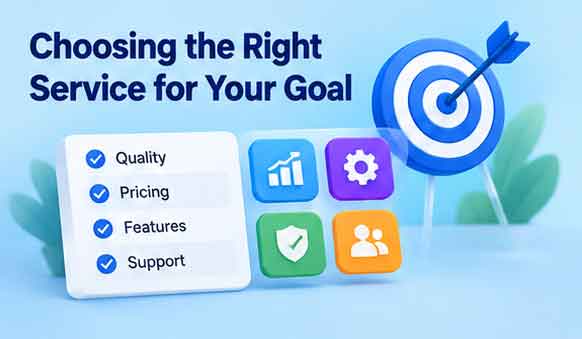
There is no universal social media service that fits every campaign. The appropriate choice depends on the platform, the type of content, and the desired outcome.
A Telegram channel may require a different approach from an Instagram profile. A YouTube video may need a different campaign structure from a TikTok account. This is why marketers should identify the exact task before selecting a service.
A useful checklist includes:
- Which platform are you targeting?
- What is the public URL?
- What metric are you trying to support?
- What is the purpose of the campaign?
- How does the activity fit into your existing content strategy?
- How will you measure the results?
Answering these questions can prevent unnecessary or poorly targeted campaigns.
The Importance of Combining Growth With Quality
Numbers can help communicate social media progress, but they are only one part of the picture. A healthy digital presence also depends on content quality, consistency, audience relevance, and communication.
For creators, this might mean combining video production with community engagement. For businesses, it could involve connecting social media activity with website traffic, leads, or sales. For community managers, it may mean using social platforms to maintain regular communication with an existing audience.
An SMM panel can support specific parts of these workflows, but the broader strategy remains in the hands of the marketer.
Final Thoughts
Social media growth is rarely the result of a single action. It is usually the outcome of consistent content, clear objectives, platform-specific planning, audience engagement, and ongoing measurement.
An SMM panel can make certain growth-related tasks more organized by bringing different services into a structured workflow. The most useful approach is to select services according to a clearly defined objective and combine them with genuine content and audience development.
For businesses, creators, agencies, and community managers working across several networks, this approach can make social media operations easier to organize. Instead of focusing exclusively on one number, marketers can build campaigns around the broader purpose of improving visibility, supporting content distribution, and developing a stronger social media presence.